
Sizing information on various components
Follow these steps to duplicate position from another bike (see diagram to the right):
1. Measure from center of BB to top of seat surface along axis of the frame's seat tube.
2. Drop a plumb line from the tip of the saddle and measure distance horizontally from there to center of BB.
These dimensions position the seat in relation to the BB.
3. Measure from tip of seat to center of handlebar, parallel to the floor. This positions the reach. 4. Measure from the top of the saddle surface directly above the seat post, to the floor. Make sure you measure perpendicularly to the floor. 5. Measure from the centerline of the handlebar to the floor. Make sure you measure perpendicularly to the floor.
These last two measurements allow the stem height to be positioned correctly in relation to the seat height.
Measure twice (at least)! If possible, metric dimensions are preferred, easier to work with. All you need to do is send or tell us the 5 measurements and we can do the rest. Please also include your height and inseam measurement (crotch to floor, barefooted). If we have any questions, we'll let you know.
If you're starting from scratch, the chart to the right will get you in the ball park, assuming you are of fairly average proportions. These sizes are assuming an aggressive (but not racing) style of riding. Frame sizes (measured in cm, center to center) are across the top, rider height in the left column, and suggested stem extensions are in the body of the chart. For example, for a 6'1" person with standard proportions, buying a 55cm size, the recommended stem extension would be 120mm. With longer legs/shorter torso, you might want to go to the 58cm size, with a 100 or 110mm stem. Also, if you want a more upright position, the stem can be mounted higher on the steerer tube, and a shorter extension can be used. Again, you can contact us with any questions about fit.
Click here to return to the top of the page
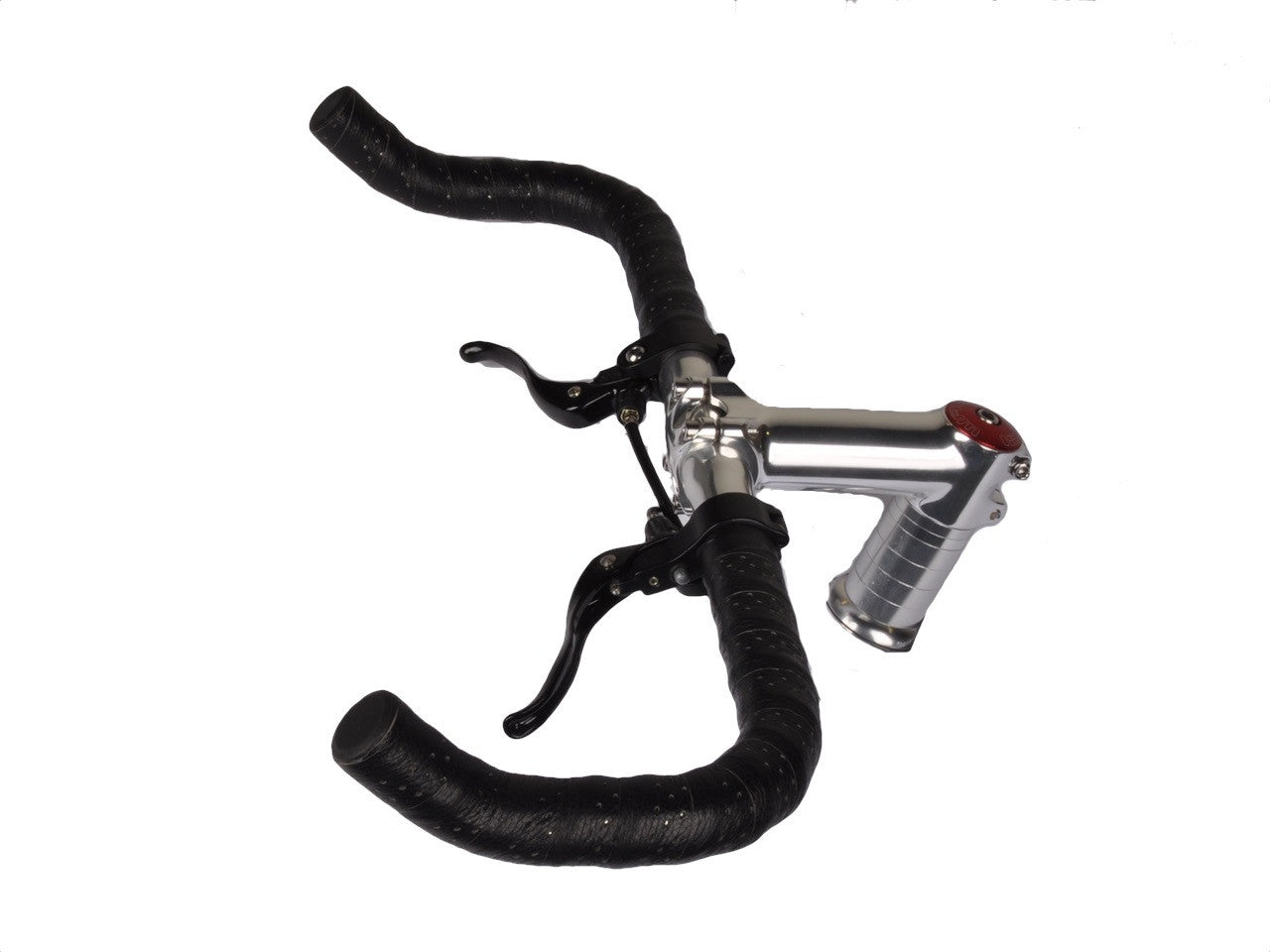
Stem extension: Stem length impacts your riding position, efficiency and comfort. If you are male, and have generally average upper and lower body proportions for your height, the default size should be OK for you. Shorter lengths are for when the upper body is proportionally smaller than average. Most females fall into this category. Also, if you prefer a more upright or more laid out position, you can go smaller or
larger respectively.
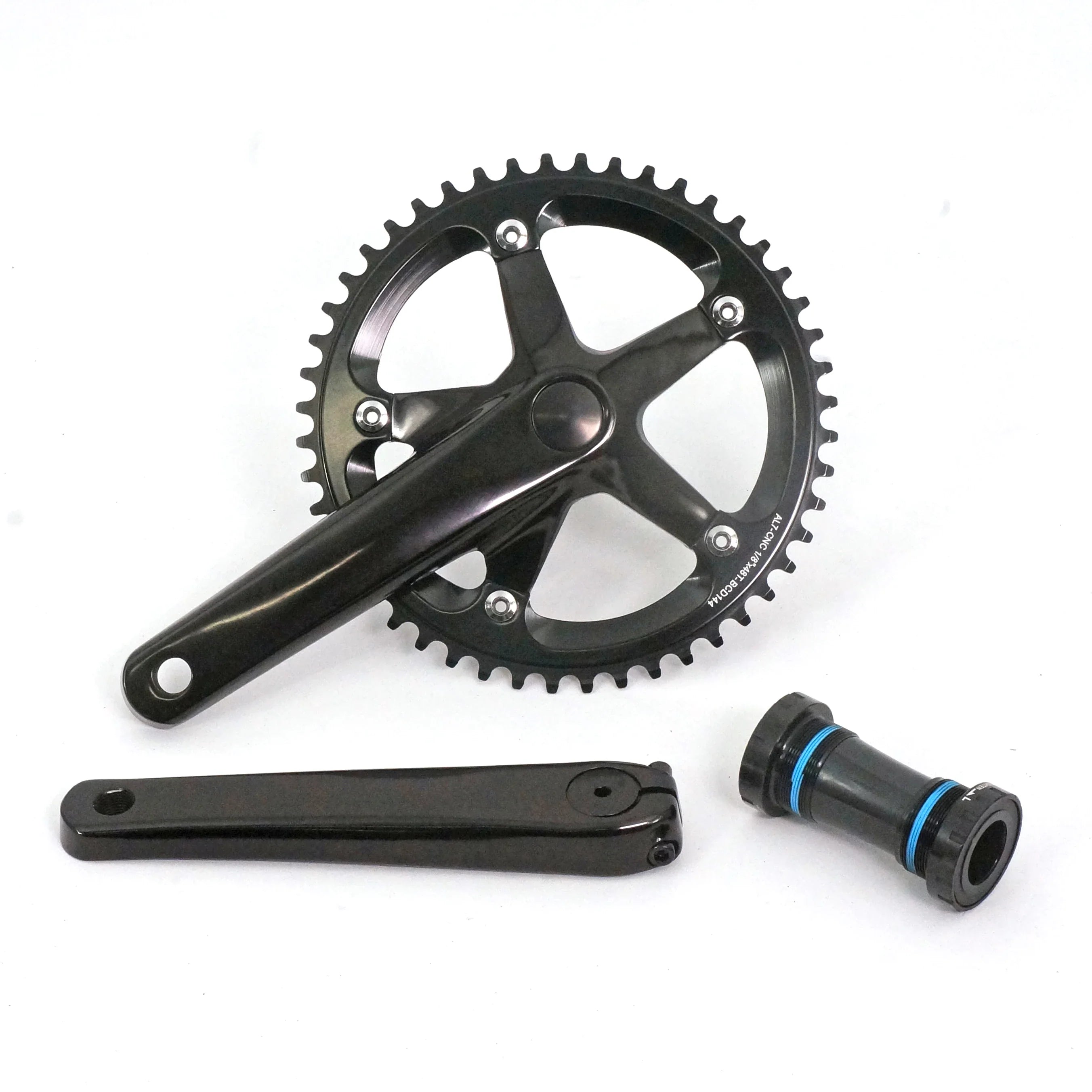
Crank arm length: The traditional length is 170mm, and works well for most people. Generally, if you are taller, and longer legged, you might want to use a longer crank, a 175mm size. However, for fixies there are two points to consider- cornering clearance is decreased with a longer crank, and for high RPM riding, shorter cranks work better. If you are on the shorter side, a 165 may work better for you. The advantage is the higher
leg speed possible with a shorter crank. The disadvantage is the loss of leverage for climbing. So, if you're in a hilly area, the 170 is usually the best compromise.
Chainring and rear cog tooth sizes: This is all about gear ratios (see chart to the right). As with all of these parts, the size of the sprockets is a personal choice. The default gearing provides a generally popular mid-range gear ratio, allowing a flat road speed of 18.5MPH at 90 RPM, small enough to climb all but the toughest hills, and not too small for the downhill ride, to keep RPMs from getting too high. If you have any questions, feel free to contact us.
Click here to return to the top of the page
| Fixed Gear Bicycle Sizing Information |


| Gearing Chart for 700C Wheel |
| Gearing Chart for 650C Wheel |
| Home About Us FAQs Returns Information Warranty Information Privacy Policy Contact Us Sizing Information Technical Information Shipping Information |
| Sizing info for frames and components- (proper) size does matter |